Minimalist Packing Planner: Pack Light, Stay Organized
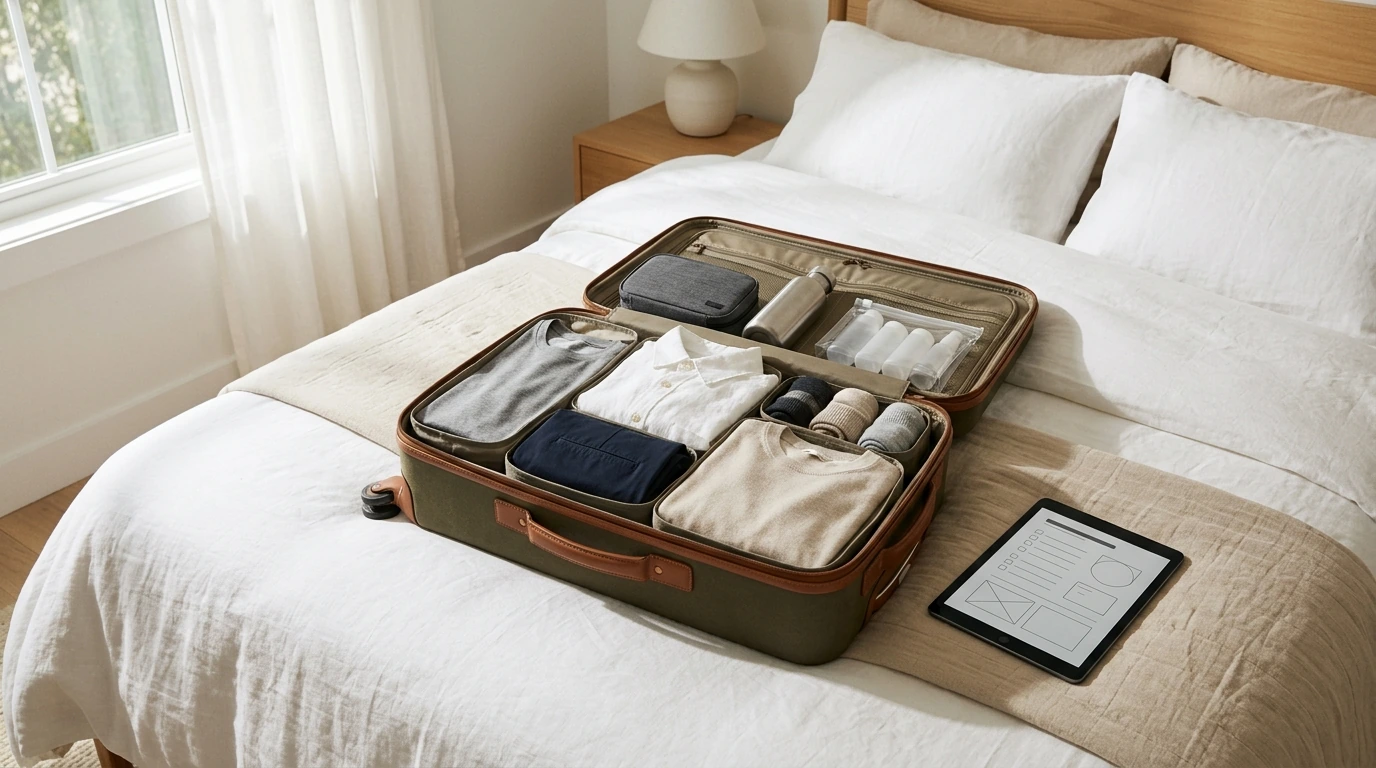
Minimalist Travel Packing Planner: Pack Light, Stay Organized, Travel Calm
Packing light doesn’t have to mean forgetting essentials or re-packing three times. A minimalist approach works best with a simple system: pick versatile pieces, plan outfits, and track essentials with a repeatable checklist. This guide walks through a practical packing method and shows how a digital planner can make it faster, cleaner, and far less stressful—whether it’s a weekend getaway or a multi-city trip.
What “minimalist packing” actually looks like
Minimalist packing is less about owning the tiniest suitcase and more about making deliberate choices so everything you bring earns its space.
- Choose multi-use essentials: lightweight layers, neutral colors, and mix-and-match basics that work across activities.
- Repeat outfits with new combinations: a small set of clothing can look different when you rotate tops, layers, and accessories.
- Pack for laundry access, not “just in case” scenarios: quick-dry fabrics make sink-washing or a quick laundromat stop far easier.
- Keep categories tight: clothing, toiletries, tech, documents, comfort/health, plus a small “extras” list (only if it’s truly useful).
If you tend to overpack, it helps to decide your limits before you start folding. When the rules are clear, decisions become quick—and the bag stays calm and uncluttered.
A simple 5-step packing method that prevents overpacking
Step 1: Lock the trip variables
Write down the non-negotiables: number of days, climate range, planned activities, dress codes, and whether you’ll have laundry access. If you’re flying, also note liquid limits—TSA’s 3-1-1 liquids rule keeps toiletry decisions simple.
Step 2: Build a capsule wardrobe
Pick a base palette (black, navy, tan, gray) and 1–2 accent colors. The goal is that almost everything matches almost everything, so you don’t need “backup” pieces to make an outfit work.
Step 3: Plan outfits, then remove duplicates
Sketch outfits by day or activity, then cut the repeats that don’t add value. A practical guideline: one “nice” option, one comfortable option, and repeatable basics you’ll genuinely wear.
Step 4: Pack by function, not by fear
Focus on what keeps the trip running: health items, chargers, documents, and one compact backup (often extra socks or underwear). For health and destination-specific considerations, the CDC Travelers’ Health guidance can help you think through what’s actually necessary.
Step 5: Run a final “bag test”
Everything should fit with room for movement, the weight should feel manageable, and nothing should be loose or fragile. If you can’t close the bag without sitting on it, your list needs edits—not a bigger suitcase.
Use the planner to turn packing into a repeatable routine
Minimalist packing gets easier when you stop reinventing the list every trip. A reusable digital template makes the process faster and reduces the “Did I forget something?” spiral.
- Save base checklists for common trip types (weekend, business, beach, cold weather), then duplicate and tweak as needed.
- Separate “must pack” from “nice to have” so last-minute cuts don’t feel stressful.
- Track quantities by category (underwear, socks, tops) to prevent accidental doubles.
- Create a “last 30 minutes” list for items that can’t be packed early: chargers, documents, meds, glasses/contacts, and your water bottle.
For a ready-to-use template, the Minimalist Travel Packing Planner | Digital Packing Guide for Light, Smart & Stress-Free Trips is designed to help you plan outfits, set category limits, and confirm essentials before anything goes into the bag.
Sample minimalist packing list (adjust by weather and trip style)
Minimalist packing framework by trip length
| Trip length | Outfits to plan | Laundry strategy | Bag goal |
|---|---|---|---|
| 2–3 days | 2–3 outfits + 1 layer | No laundry needed | Personal item or small carry-on |
| 4–7 days | 4–5 outfits, repeat basics | One sink wash or laundromat | Carry-on |
| 8–14 days | 5–7 outfits, capsule approach | Laundry every 4–6 days | Carry-on + small personal item |
Common packing stress points—and quick fixes
Product: Minimalist Travel Packing Planner (digital guide)
Find it here: Minimalist Travel Packing Planner | Digital Packing Guide for Light, Smart & Stress-Free Trips.
Helpful add-ons for a calmer travel routine
- Start with fewer duplicates at home: A streamlined closet makes every trip easier. The Room-by-Room Decluttering Toolkit can help create “default favorites” so packing feels obvious.
- Lower pre-trip overwhelm: A short daily reset can keep the week before departure from feeling frantic. Try Mindful Clarity: Journal & Prompts for a calmer routine.
- Keep travel tasks on track: Use a structured timeline for bookings, confirmations, and deadlines. The Goal-Setting Guide for Real Results is helpful for organizing pre-departure to-dos.
FAQ
How many outfits are enough for a minimalist trip?
For 2–3 days, plan 2–3 outfits plus one layer; for 4–7 days, plan 4–5 outfits and repeat basics; for 8–14 days, plan 5–7 outfits and do laundry every 4–6 days. Layers and a tight color palette make repeating outfits feel effortless.
What should always be packed at the last minute?
Pack essentials you’re actively using: phone, wallet, ID/passport, medications, glasses/contacts, and chargers. A dedicated “last 30 minutes” checklist prevents leaving critical items on the counter.
How do you stop overpacking when you’re unsure about the weather?
Plan for the coldest expected day using layers, then add a compact rain shell for coverage without bulk. Limit categories (especially shoes and jackets) and choose pieces that work across temperature swings.











Leave a comment