Vacuum Stress in Pets: Train Calm Dogs & Cats
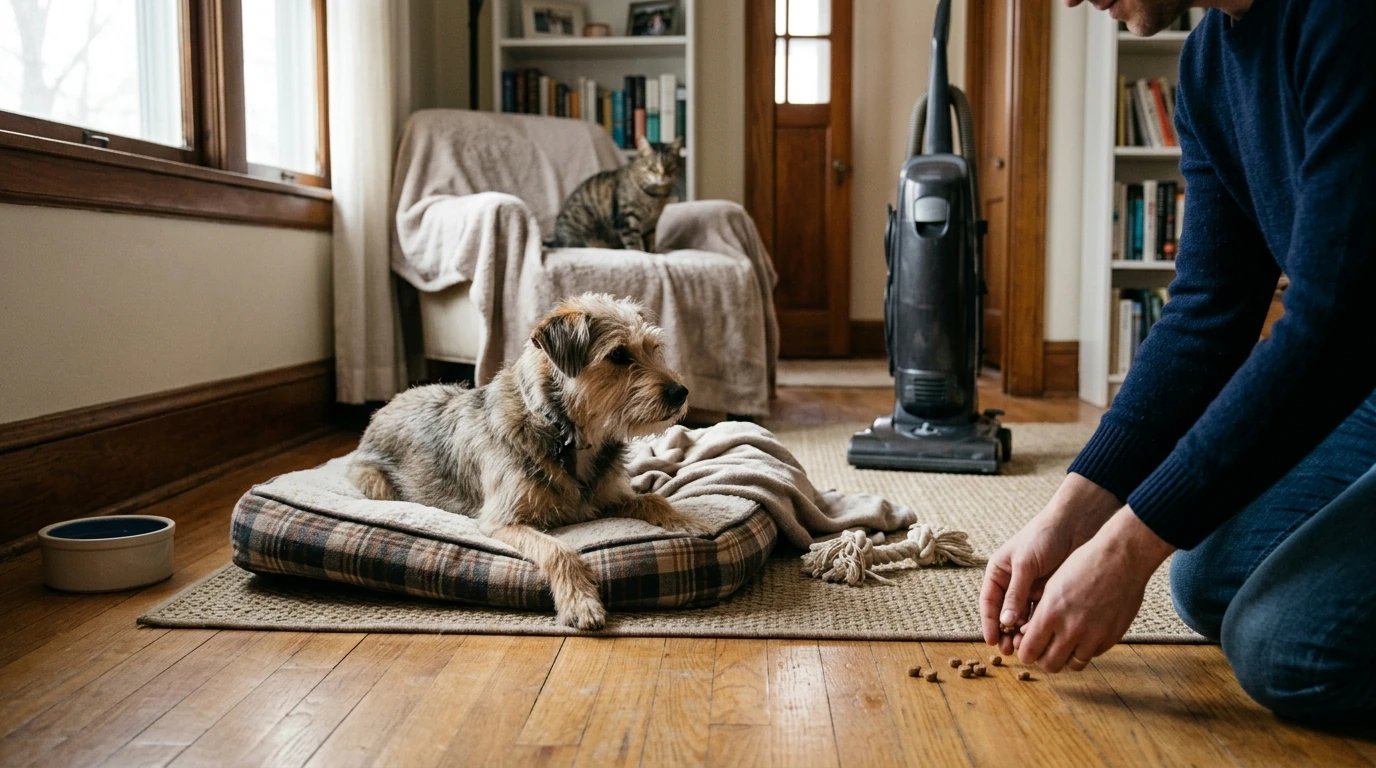
Helping Pets Handle Vacuum Stress: A Calm, Step-by-Step Plan for Quieter Cleaning Days
Some pets interpret the vacuum as a loud, unpredictable threat: noise, vibration, moving parts, and shifting airflow can all trigger fear responses. The good news is that fear isn’t “stubbornness”—it’s a normal safety reaction. With a gradual training plan, a better cleaning setup, and a few comfort cues, many dogs and cats can learn to tolerate vacuuming (and sometimes even relax through it) without turning cleaning time into a daily crisis.
Why vacuums feel scary to pets
To a pet, a vacuum can combine several “danger signals” at once:
- Sound intensity and pitch: Many vacuums land in a frequency range that’s startling, especially for animals with sensitive hearing.
- Movement pattern: A vacuum approaches, retreats, and pivots—motions that can resemble chasing or stalking.
- Vibration and airflow: Floor vibration plus a blast of air at ground level can feel threatening or confusing.
- Past learning: One scary moment (cord snag, sudden start, loud bang) can create a lasting association with the closet, the cord, or the click of the switch.
If your pet reacts “out of nowhere,” it’s often because the warning signs were subtle at first—or because the vacuum has become a predictor of overwhelm.
Spot the signs of stress early
Catching stress before it peaks is the difference between a teachable moment and a panic response.
- Dogs: panting when not hot, pacing, trembling, tail tucked, whale eye, barking/lunging, trying to herd or attack the vacuum, hiding or bolting.
- Cats: ears flattened, crouching, wide pupils, swishing tail, hiding, refusing food, inappropriate elimination, overgrooming after exposure.
- Escalation cues: refusal of treats, pinned posture, freezing, or frantic escape attempts—these signal the session is too intense and needs to be scaled back.
Quick stress check: what to do in the moment
| Sign | What it can mean | Immediate adjustment |
|---|---|---|
| Trembling or freezing | Over threshold (too scared to learn) | Stop vacuuming; move the pet to a safe room; resume later with a gentler step |
| Barking/lunging at vacuum | Defensive/redirected energy | Increase distance; keep vacuum stationary; reward calm at a safe range |
| Hiding and won’t come out | Avoidance learning strengthening | Don’t force interaction; provide a cozy hide; work on gradual exposure on a different day |
| Taking treats but scanning | Mild stress but still learning | Continue slowly; shorten session; keep rewards frequent |
Set up a “safe zone” before training
Before you train any tolerance, give your pet a predictable place that stays “vacuum-free” during early stages. This prevents accidental setbacks and builds trust.
- Choose a quiet room or crate area that you can close off while you clean.
- Add comfort anchors: bed, familiar blanket, water, and an enrichment item (lick mat, puzzle feeder, or food-stuffed toy).
- Use sound buffering: close doors, add a draft stopper, run a fan/white noise, or play low-volume calm music.
- Aim for predictability: a consistent routine helps pets recover faster and reduces “anticipatory anxiety.”
For welfare guidance and behavior basics, reputable references include the American Veterinary Medical Association (AVMA) behavior resources and the ASPCA guidance on fearful cats and stress reduction.
A gradual training ladder (desensitization + positive association)
This ladder works best when sessions stay under your pet’s fear threshold. Think “tiny steps, frequent wins.” If your pet can’t eat treats, the step is too hard.
Step 1 — Vacuum stays off
Place the vacuum in view at a distance. Reward calm looks, sniffing, or choosing to disengage. End the session before stress rises.
Step 2 — Neutral movement (vacuum still off)
Roll the vacuum a few inches, then stop. Pair each movement with treats. Keep your shoulders loose and your breathing slow—pets often mirror body tension.
Step 3 — Sound at a distance
Turn the vacuum on briefly in another room (or far down a hallway). Immediately reward, then stop. Several 1–3 second exposures can beat one long exposure.
Step 4 — Sound in the same room, far away
Start with 1–3 seconds of sound, reward, then turn it off. Over days, gradually build duration while keeping distance generous.
Step 5 — Real vacuuming in small bursts
Vacuum a small section, pause, reward calm behavior, and repeat. If your pet chooses the safe zone and settles there, that counts as success.
Success markers
- Pet can eat, sniff, and settle during exposure.
- Recovery time is short after the vacuum stops.
- Stress signals diminish across sessions (less scanning, less hiding, more normal behavior).
Training tips that make progress faster
If you want a structured routine you can follow consistently, Helping Pets Handle Vacuum Stress provides a guided approach and repeatable steps for building tolerance without accidental leaps in difficulty.
When it’s better to manage than train (for now)
Not every pet is ready for training right away. If your pet panics, tries to bite the vacuum, or injures themselves while escaping, prioritize management and consult a veterinarian or qualified behavior professional. For additional background on fear and anxiety, the RSPCA overview of fear and anxiety in dogs is a helpful starting point.
Tools that can support calmer vacuum sessions
For a more organized home routine that can make cleaning sessions shorter and less chaotic, the Room-by-Room Decluttering Toolkit can help streamline spaces so vacuuming takes less time. If vacuum days also spike human stress (which pets notice), Mindful Clarity: Journal & Prompts is an easy way to build a calmer pre-cleaning routine.
Common mistakes that slow improvement
FAQ
What pets can help relieve stress?
Companion animals can reduce stress through routine, gentle touch, and social support—dogs and cats are the most common examples, and some people also find rabbits or guinea pigs calming. Temperament matters: a pet that’s anxious or overwhelmed won’t be able to offer much comfort until their own needs (safety, quiet, predictability) are met.












Leave a comment